Why EMT Support Is Essential During Gurney Transportation?
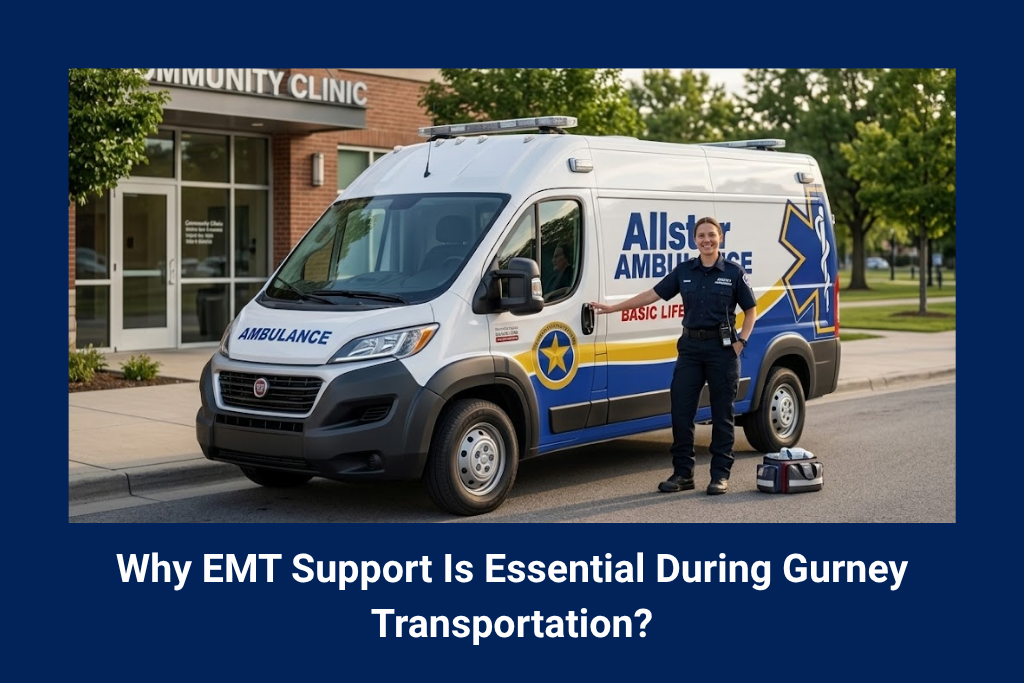
Why EMT Support Is Essential During Gurney Transportation?
Getting a loved one from a hospital bed to a nursing home, or from home to a follow-up appointment, sounds simple until you actually have to do it. For patients who cannot sit upright, walk, or safely ride in a regular car, the process requires far more than a vehicle with wheels. It requires trained hands, careful monitoring, and a calm, experienced presence from start to finish. That is exactly where EMT support during gurney transportation makes all the difference.
Non-emergency medical transportation is often misunderstood. Because there is no siren, no flashing lights, and no life-threatening emergency, people sometimes assume it is a low-stakes errand that any driver could handle. In reality, moving a patient who is lying flat on a stretcher involves real medical risk, and that risk is exactly why non-emergency medical transportation NEMT services rely on certified EMTs, not just drivers, to get patients where they need to go.
In this blog, we will walk through why EMT support is so important specifically for non-emergency gurney transportation, what to look for in a provider, and how a company like Allstar Ambulance approaches this work every day in Stanislaus County.
What Is Non-Emergency Medical Transportation (NEMT)?
Non-emergency medical transportation, or NEMT, refers to transporting patients who need medical-grade transport but are not in the middle of a life-threatening emergency. This includes people being discharged from a hospital, residents moving between nursing homes, patients heading to dialysis or specialist appointments, and individuals returning home after surgery.
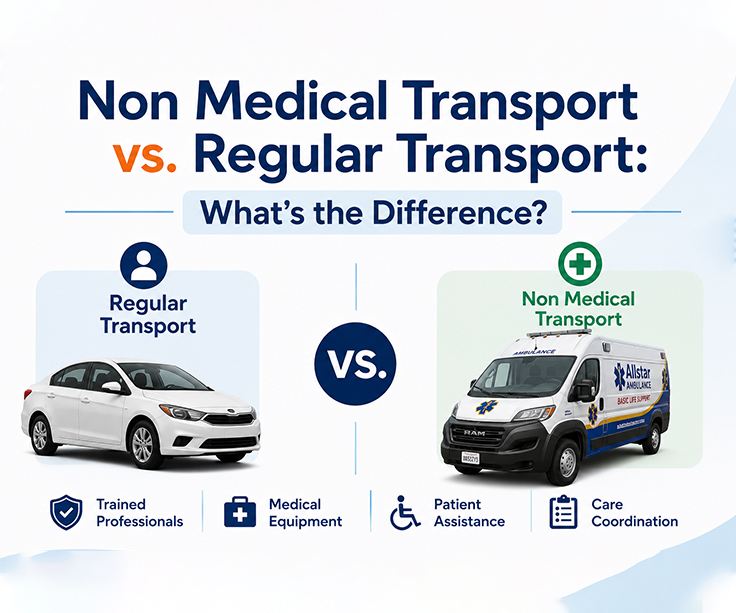
Unlike a taxi or rideshare, non emergency medical transportation NEMT services are designed around the patient's physical condition. Many of these patients cannot bend at the hips, sit in a wheelchair, or tolerate being jostled. For them, a gurney is not a luxury; it is a medical necessity.
Why Gurney Transportation Requires More Than a Vehicle
Gurney transportation involves moving a patient who is lying flat, often with limited mobility, on a specialized stretcher secured inside a vehicle built for that purpose. This is very different from wheelchair transport or ambulatory transport, where the patient can assist with the process.
During gurney van transportation, the patient is essentially immobile for the duration of the ride. That means any change in their condition, a shift in breathing, a drop in blood pressure, discomfort from positioning, has to be caught and addressed immediately by someone trained to recognize it. A driver without medical training may not notice these changes until they become serious. This is the core reason gurney transportation EMT support exists: to have a trained set of eyes and hands present the entire time, not just a set of wheels.
The Role of EMT Support During Gurney Transportation
When you book gurney transportation services with a licensed provider, you are not just paying for a ride, you are paying for a level of care that follows the patient from pickup to drop-off. Here is what that typically includes:
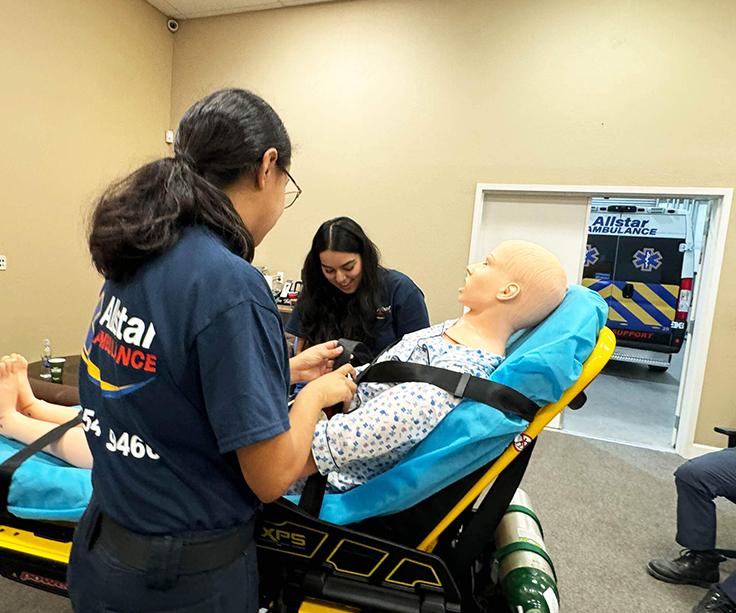
1. Safe Loading and Unloading- Transferring a patient from a hospital bed to a gurney, and then from the gurney into the vehicle, requires proper technique to avoid injury to the patient's spine, joints, or surgical sites. EMTs are trained specifically in these transfer techniques.
2. Continuous Monitoring- A patient transport monitor is often used to track vital signs such as heart rate, blood pressure, and oxygen saturation throughout the trip. EMTs know how to read these numbers and respond appropriately if something looks off, rather than simply driving and hoping for the best.
3. Medical Equipment Management- Many patients travel with oxygen tanks, IV lines, catheters, or other medical equipment. EMTs are trained to secure and manage this equipment so it functions properly and does not become a hazard during transport.
4. Comfort and Positioning- Long rides on a flat gurney can be uncomfortable, especially for patients recovering from surgery or those with chronic pain. EMTs know how to adjust positioning within medical guidelines to reduce discomfort without compromising safety.
5. Emergency Readiness- Even in non-emergency transport, situations can change quickly. A patient who seems stable can develop symptoms mid-ride. EMTs carry the training and equipment to respond to a sudden change in condition until further help can be reached, which is a level of preparedness a standard driver simply does not have.
Who Needs Gurney Transportation?
Gurney transportation is commonly needed for:
- Patients being discharged from the hospital who cannot sit upright
- Individuals transferring between nursing homes or care facilities
- Post-surgical patients returning home
- Bariatric transportation for patients who require specialized equipment and additional staff to move safely and with dignity
- Patients undergoing regular treatments such as dialysis
- End-of-life or hospice patients being moved between care settings
For families searching "gurney transportation near me" or "stretcher transportation services near me," the priority should never be speed or price alone. The priority should be whether the provider has trained EMTs on staff, proper equipment, and a track record of safe, respectful patient handling.
Bariatric Transportation Deserves Special Attention
Bariatric transportation is a specific and often overlooked need within non-emergency medical transport. Patients who require bariatric transport need vehicles equipped with reinforced gurneys, wider loading ramps, and additional trained personnel to ensure the move is safe for both the patient and the crew. Attempting bariatric transport without the right equipment or without EMT support puts everyone involved at risk, including the risk of patient injury, staff injury, or damage to equipment. A qualified provider will have the right gurneys, ramps, and trained staff to handle these transports with the same level of dignity and safety as any other patient.
What to Look for in a Gurney Transportation Provider?
If you are researching gurney transportation services for yourself or a family member, here are a few questions worth asking:
- Are the staff certified EMTs, not just drivers?
- Does the company use a patient transport monitor for vital signs during transit?
- Are vehicles equipped for bariatric transportation if needed?
- What is the company's response time and service area?
- Is the provider locally based and familiar with the hospitals and facilities in your area?
Local knowledge matters more than people expect. A provider based in Stanislaus County transportation routes, for example, will already know the fastest and safest routes between local hospitals, nursing homes, and clinics, which can reduce transport time and stress for the patient.
Why Local, EMT-Staffed Providers Make a Difference?
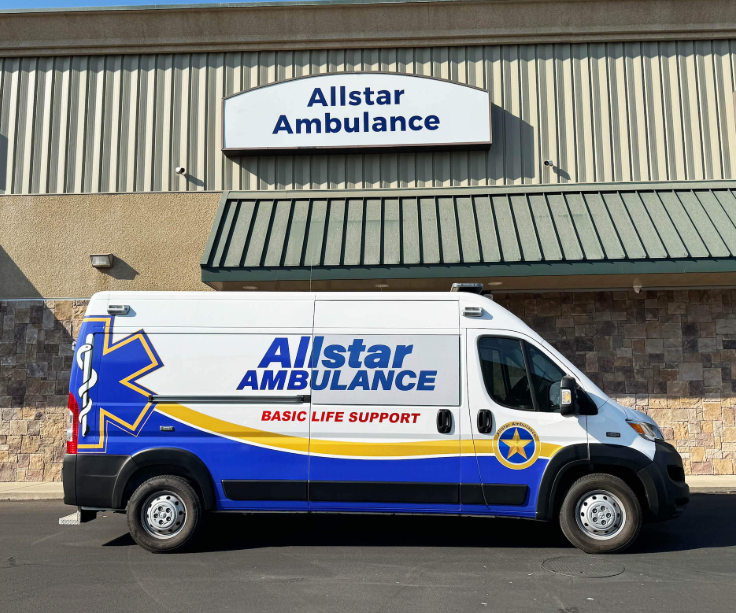
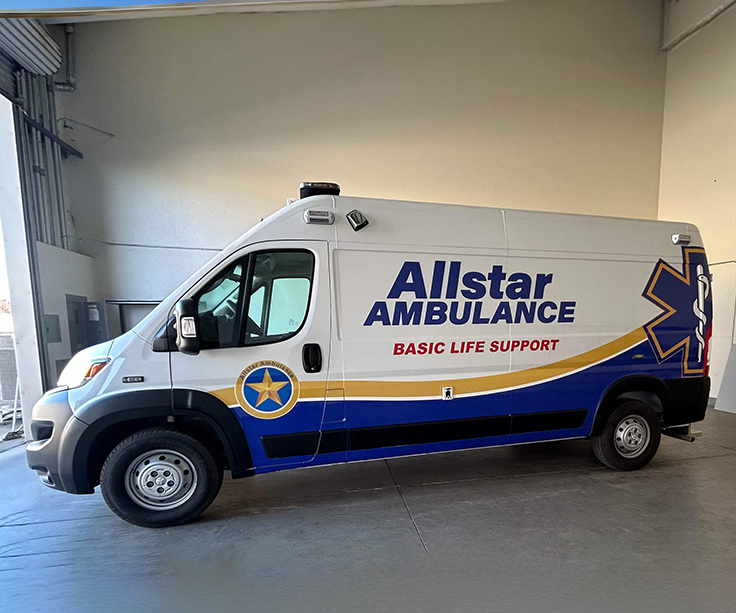
Choosing a locally owned provider often means faster response times and a team that genuinely understands the community they serve. At Allstar Ambulance, headquartered in Modesto within Stanislaus County, the team is built around exactly this idea: fast response, experienced EMTs, and a real connection to the patients and families they transport. Whether the need is a hospital-to-hospital transfer, a nursing home transport, or private home medical transport, having trained EMTs present during gurney transportation is not an added extra, it is the standard of care every patient deserves. You can review the full range of services on our Ambulance Services page, or request a transport directly.
Final Thoughts
Non-emergency does not mean non-medical. Every gurney transport carries real risk, and that risk is best managed by trained EMTs who know how to move, monitor, and care for patients throughout the ride. Whether you are searching for gurney transportation near me, comparing non-emergency medical transportation NEMT services, or looking specifically for bariatric transportation, the safest choice is always a provider that puts trained medical professionals at the center of the process, not just a vehicle.
Frequently Asked Questions
For more common questions, visit our full FAQ page.
1. What is the difference between emergency and non-emergency gurney transportation?
Emergency transportation responds to life-threatening situations with lights and sirens. Non-emergency gurney transportation is for stable patients who still cannot sit upright or move on their own, such as those being discharged from a hospital or transferred between facilities.
2. Why do I need an EMT for a non-emergency transport if the patient is stable?
A patient's condition can change during a ride, even a short one. EMTs are trained to monitor vital signs, manage medical equipment, and respond quickly if something changes, offering a level of safety a standard driver cannot provide.
3. Does gurney transportation include monitoring of vital signs?
Yes. Reputable providers use a patient transport monitor to track heart rate, blood pressure, and oxygen levels throughout the trip, with a trained EMT interpreting the readings
4. What is bariatric transportation, and how is it different?
Bariatric transportation is designed for patients who require specialized, reinforced equipment and additional trained staff to move safely and comfortably. It requires specific vehicles and gurneys built for higher weight capacities.
5. How do I find reliable stretcher transportation services near me?
Look for a locally based, licensed BLS provider with certified EMTs on staff, proper equipment for gurney and bariatric transport, and experience serving hospitals and care facilities in your area, such as Allstar Ambulance in Stanislaus County.
6. What types of trips does non-emergency medical transportation typically cover?
Common trips include hospital discharges, nursing home transfers, private home medical transport, dialysis appointments, post-surgical transport, and hospice or end-of-life patient moves.