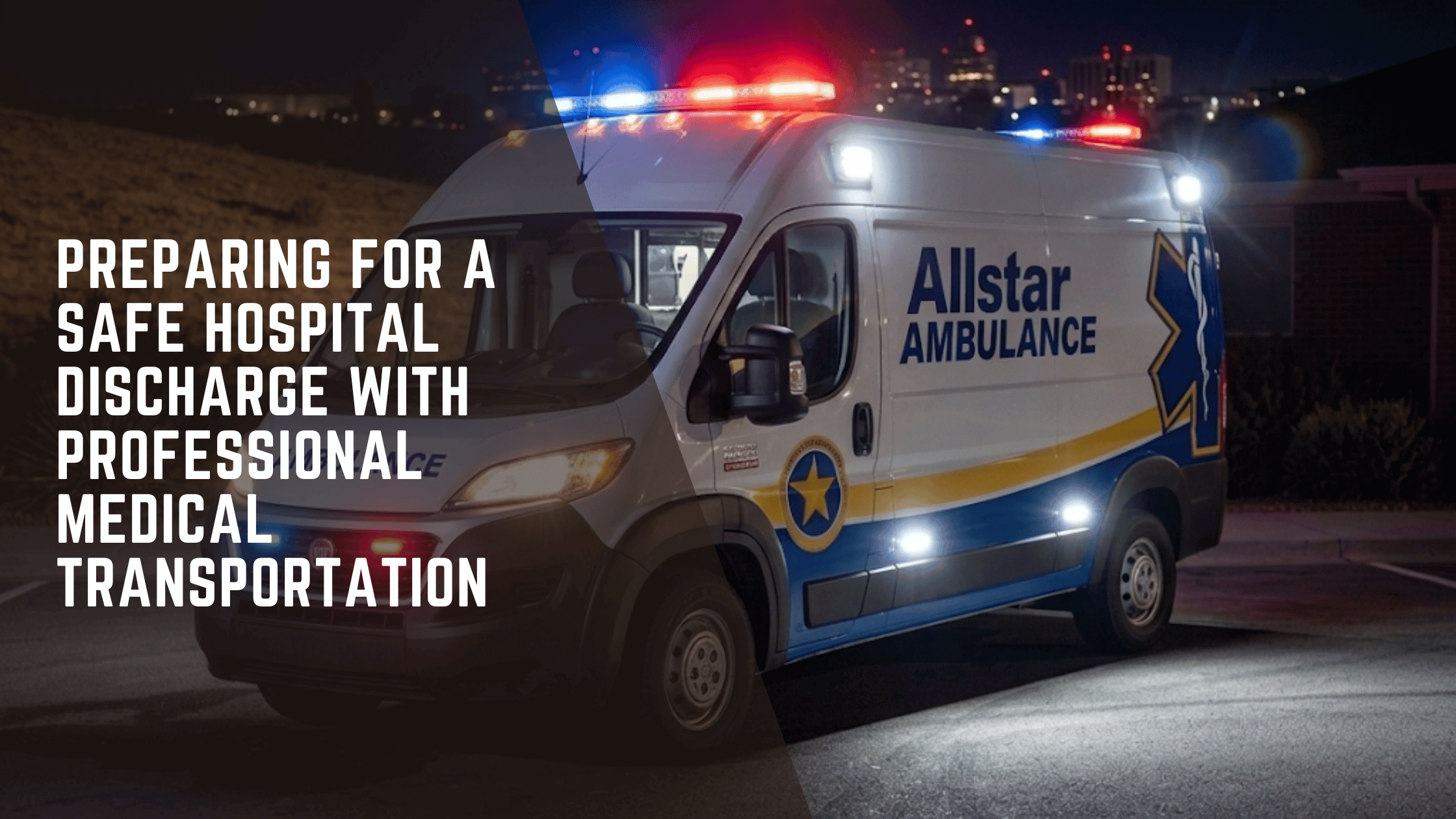
What Is a Basic Life Support Ambulance and How Does It Work?
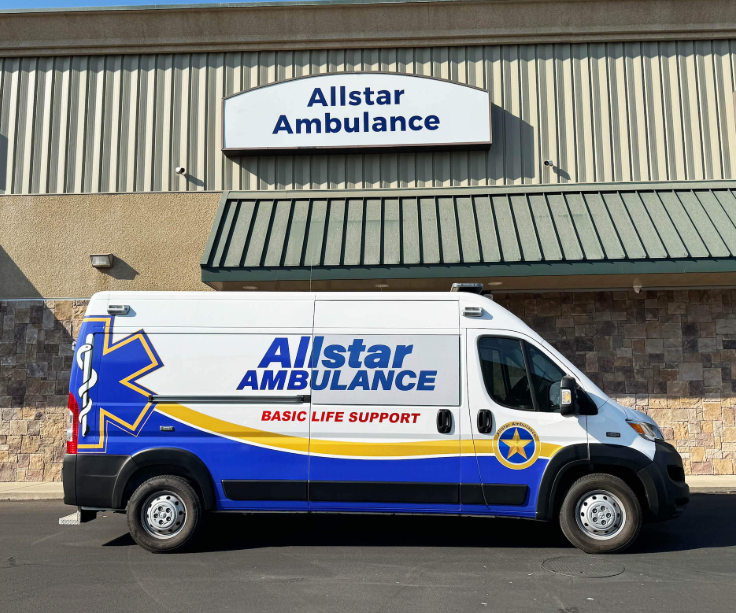
What Is a Basic Life Support Ambulance and How Does It Work?
When you or a loved one needs medical transportation, understanding your options is important. One of the most common services we provide at Allstar Ambulance is Basic Life Support (BLS) ambulance transport.
But many people still ask:
What is a BLS ambulance? How does it work? And who actually needs it?
In this guide, we’ll walk you through everything you need to know about a basic life support ambulance, how it differs from other emergency services, and when it’s the right choice for you or your family.
What Is a BLS Ambulance?
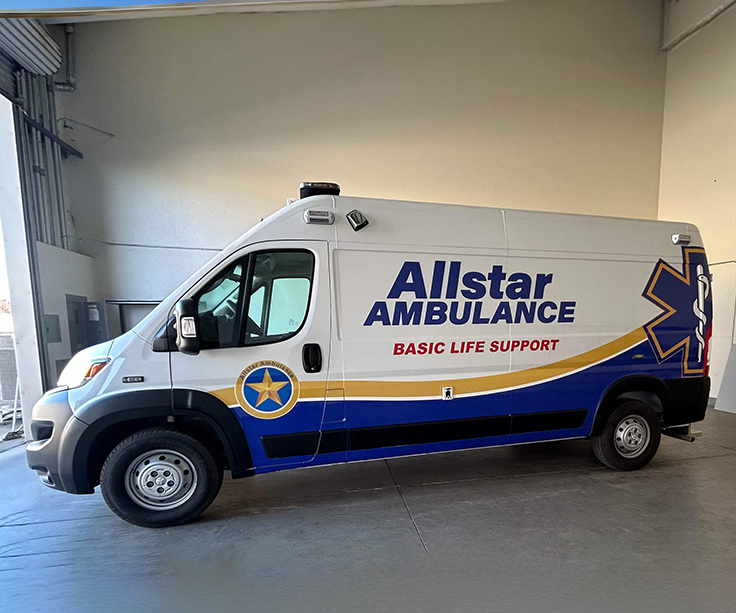
A Basic Life Support (BLS) ambulance is designed to provide essential medical care during transport. When you choose our BLS ambulance transport, you receive professional care from trained Emergency Medical Technicians (EMTs) who focus on stabilization, monitoring, and safe patient transfer.
When people search for “what is BLS ambulance?”, the simple answer is:
It’s an ambulance equipped to provide non-invasive, life-supporting medical care for patients who are stable but still require professional supervision during transport.
At Allstar Ambulance , our BLS units are fully equipped to:
- Monitor vital signs
- Provide oxygen support
- Perform CPR if needed
- Use an AED (Automated External Defibrillator)
- Assist with airway management
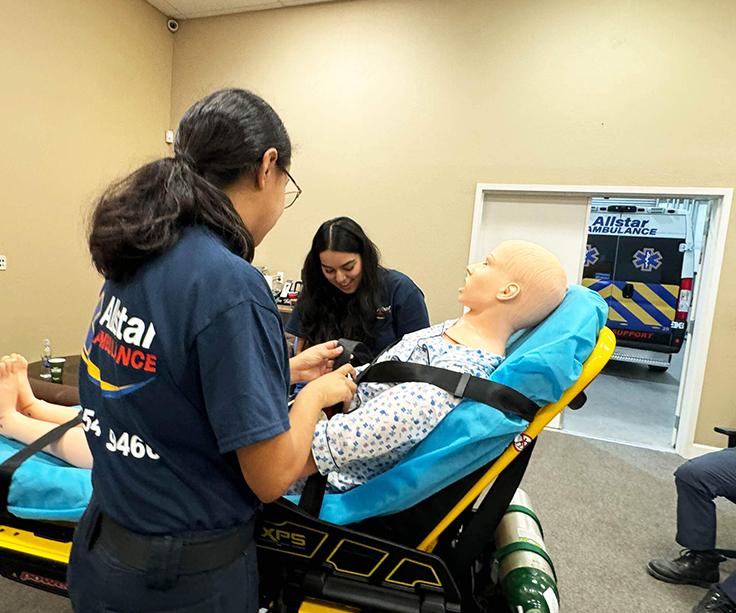
- Provide safe gurney transportation
- Ensure secure and comfortable patient transfer
We do not perform advanced invasive procedures like IV medication administration or intubation; those services fall under Advanced Life Support (ALS). However, for many medical situations, BLS medical transport is exactly what patients need.
How Does BLS Ambulance Transport Work?
When you contact us for BLS transport services, we begin by assessing the patient’s condition to ensure Basic Life Support is appropriate.
Here’s how our process works:
-
Initial Assessment
We gather details about the patient’s medical condition, mobility, oxygen needs, and destination. -
Proper Equipment Preparation
Our BLS transport ambulance is prepared with oxygen supplies, monitoring equipment, stretcher systems, and safety restraints. -
Professional EMT Care
Our skilled EMTs monitor the patient’s vital signs throughout the trip and provide immediate support if needed. -
Safe Transfer
Whether we’re transporting from:- Hospital to hospital
- Nursing home to medical facility
- Private home to appointment
- Or after discharge
Our goal is simple: deliver safe, efficient, and respectful patient transport ambulance services across Stanislaus County.
What Is the Difference Between BLS and ALS Ambulance?
A common question we hear is about the difference between BLS and ALS ambulance services.
Here’s a clear breakdown:
| Basic Life Support (BLS) | Advanced Life Support (ALS) |
|---|---|
| Staffed by EMTs | Staffed by Paramedics |
| Provides oxygen & CPR | Provides IV medications & advanced airway procedures |
| For stable patients | For critical or life-threatening cases |
| Used for scheduled or non-emergency transport | Used for severe emergencies |
If a patient is experiencing:
- Cardiac arrest
- Stroke symptoms
- Severe trauma
- Life-threatening breathing issues
An emergency ambulance service (ALS) is required.
If a patient is stable but needs monitoring and medical support during transport, BLS ambulance transport is typically the appropriate and cost-effective choice.
When you call 911, dispatch determines the correct level of care. For scheduled or non-emergency medical transportation services, you can contact us directly.
Who Needs a Basic Life Support Ambulance?
Our BLS medical transport is ideal for patients who:
- Require oxygen during transport
- Need monitoring after hospital discharge
- Cannot safely sit upright for long periods
- Require gurney transportation
- Are being transferred between facilities
- Need supervision due to medical conditions
- Are traveling to dialysis or rehabilitation
We frequently provide BLS transport for:
- Hospital transfers (Interfacility Transport - IFT)
- Nursing home residents
- Assisted living communities
- Post-surgery patients
- Long-distance medical transfers
If you’re unsure whether BLS ambulance transport is appropriate, we’re always happy to guide you.
What Is Gurney Transportation?
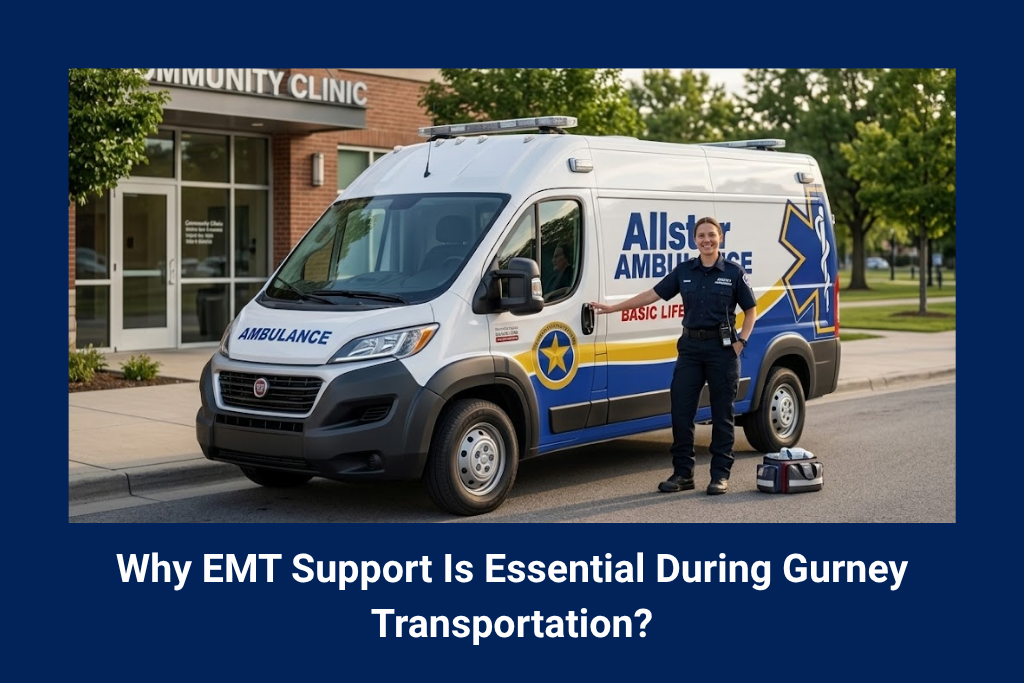
Many patients we serve require gurney transportation, especially those who are bedridden or recovering from surgery.
A gurney is a medical stretcher that allows patients to lie flat securely during transport. Our ambulances are equipped with professional-grade stretcher systems that:
- Secure the patient safely
- Absorb shock for smoother rides
- Provide comfort and stability
- Allow EMTs to monitor patients easily
Gurney transport is common for:
- Non-ambulatory patients
- Post-operative care
- Long-term care residents
- Patients with mobility restrictions
As part of our medical transportation services, we ensure every gurney transfer is handled with dignity and professionalism.
Emergency Ambulance Service vs. BLS Transport Services
It’s important to understand the difference between a true emergency ambulance service and scheduled BLS transport.
Emergency ambulance services are designed for:
- Immediate life-threatening situations
- Rapid response to accidents
- Cardiac emergencies
- Severe trauma
Our BLS transport services focus on:
- Stable but medically supervised transport
- Scheduled appointments
- Facility transfers
- Non-emergency care with professional oversight
Both are essential; they simply serve different medical needs.
Why Choose Allstar Ambulance?
At Allstar Ambulance , we are proud to be a locally owned and operated BLS and IFT provider headquartered in Modesto, serving all of Stanislaus County.
What sets us apart:
- Experienced EMT team
- Fast response times
- Community-focused service
- Compassionate patient care
- Reliable scheduling
- Safe and modern equipment
Whether you need hospital transfers, nursing home transport, or private home medical transport, we’re here when it matters most.
We understand that arranging medical transportation can feel overwhelming. That’s why we make the process simple, respectful, and efficient.
Need reliable medical transportation?
Contact Allstar Ambulance today to schedule safe and professional BLS transport services.
Frequently Asked Questions (FAQs)
1. What is a BLS ambulance?
A BLS ambulance provides essential life-support services such as oxygen administration, CPR, vital sign monitoring, and safe medical transport for stable patients.
2. Who needs BLS ambulance transport?
Patients who are medically stable but require monitoring, oxygen support, or stretcher transport during transfer typically need BLS transport.
3. What is the difference between BLS and ALS ambulance?
BLS ambulances provide basic medical care with EMTs, while ALS ambulances include paramedics who can administer advanced medications and perform invasive procedures.
4. Can BLS ambulances handle emergencies?
Yes, BLS units can respond to certain emergencies, but they are best suited for non-life-threatening situations. Critical emergencies require ALS services.
5. Is BLS medical transport covered by insurance?
Coverage varies by provider and medical necessity. Many insurance plans cover medically necessary BLS ambulance transport.
6. How do I schedule BLS transport services?
You can contact us directly to arrange non-emergency or scheduled patient transport.