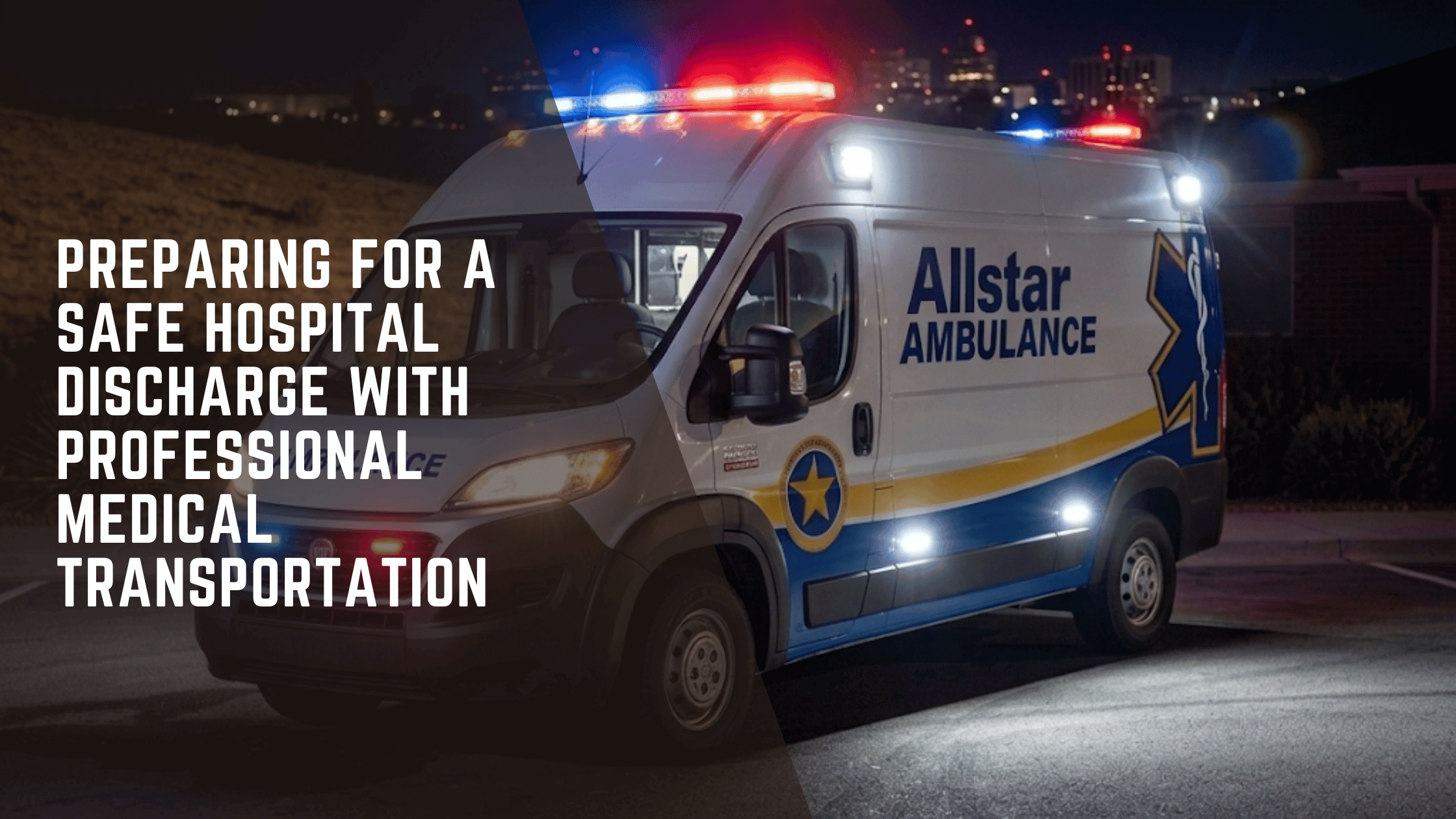
When Should You Choose Non-Emergency Medical Transportation Instead of 911?
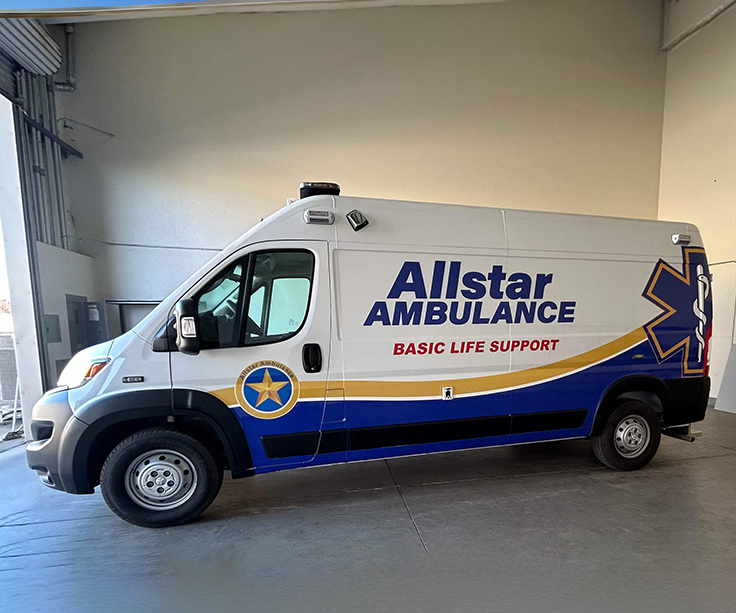
When Should You Choose Non-Emergency Medical Transportation Instead of 911?
When someone needs a medical ride, it’s not always clear whether to dial 911 or schedule a non-emergency trip. Calling 911 is critical if a patient’s condition is unstable or life-threatening (for example, chest pain, stroke, severe bleeding, or loss of consciousness). In those cases, emergency medical services arrive with lights and sirens ready to provide immediate treatment. Non-emergency medical transportation (NEMT), by contrast, is for planned, routine moves when the patient is stable and can be prepared for a scheduled trip. Local providers like Allstar Ambulance make it easy to find reliable “ambulance transport services near me” in Stanislaus County for these situations. In this blog we’ll explain the difference, describe key services (BLS ambulances, gurney transport, oxygen support, event standby), and help you decide when to use NEMT rather than 911.
What Is Non-Emergency Medical Transportation?
Non-emergency medical transportation refers to scheduled, non-urgent patient transfers. These trips are arranged in advance (often through your doctor, hospital discharge planner or a transport company) and keep the patient’s existing care plan intact. NEMT is typically used to transport patients between facilities or to routine appointments when medical support is needed on the way for example, discharging from a hospital to home, going to dialysis, or traveling from a nursing home to a doctor’s office. Basic Life Support (BLS) ambulances are a common form of NEMT: we handle inter-facility transfers (hospital-to-hospital, nursing home-to-hospital, etc.) and scheduled home pickups, often without using lights or sirens.
Because NEMT is planned, the crew can ensure all necessary equipment and medications (oxygen, IVs, feeding tubes, etc.) are on board. It’s designed to maintain a patient’s prescribed routines during transit (medications, oxygen supply, hydration). In short, think of NEMT as a medical ride that supports a patient’s current care, not as a response to a new emergency.
NEMT vs. 911/Emergency Services
It helps to compare the two options side by side:
911 / Emergency Ambulance:
Activated by calling 911, this is for urgent, life- or limb-threatening emergencies. EMS crews respond as quickly as possible with advanced equipment. They can provide CPR, advanced cardiac life support, intubation, and other emergency treatments. Lights and sirens are typically used. If someone is experiencing sudden, severe symptoms (chest pain, difficulty breathing, sudden confusion, heavy bleeding, choking, etc.), always call 911. If you’re ever in doubt about the severity, it’s safer to call 911 and let the dispatcher advise.
Non-Emergency (NEMT):
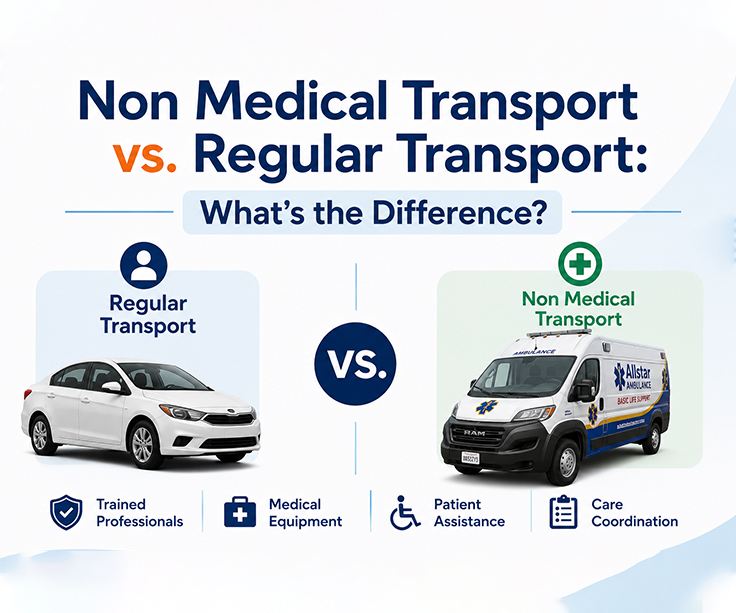
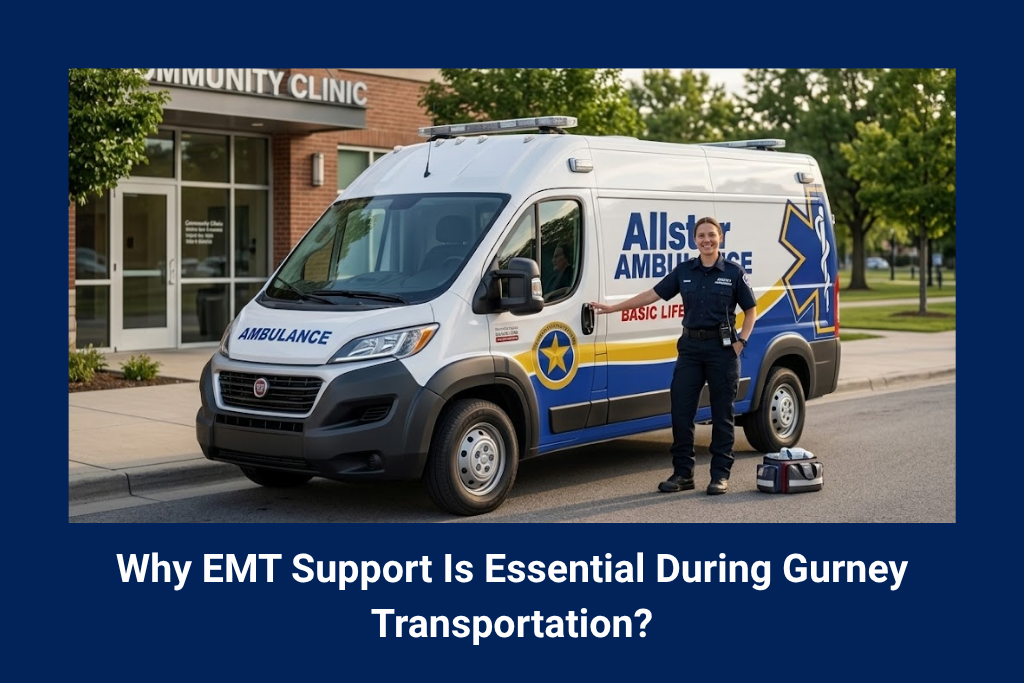
Scheduled in advance and suited for stable conditions. The ambulance crew focuses on safe transport and comfort, not new treatment. Key examples include routine hospital discharges, nursing home rides, trips to outpatient therapy or dialysis, and medical appointments for patients who can’t use regular cars or ambulatory services. NEMT vehicles are staffed by EMTs providing Basic Life Support (BLS) ; we carry essentials like oxygen tanks, stretchers (gurneys), AEDs and first-aid kits. These transports do not use lights and sirens in normal situations and do not initiate new interventions; we simply keep the patient stable during the trip.
Timing:
NEMT trips are pre-arranged with set pickup and drop-off times. Emergency ambulances are dispatched immediately without prior scheduling.
Purpose:
Emergency EMS is about diagnosis and urgent care: stabilize the patient’s crisis and rapidly deliver them to a hospital. NEMT is about continuity of existing care: maintaining medication schedules, oxygen therapy, feeding routines, etc., while moving the patient safely from A to B.
If the patient’s condition is urgent or unstable, call 911 (emergency). If the patient is stable and needs a scheduled medical ride (hospital discharge, rehab appointment, etc.), choose us.
Common Scenarios for Non-Emergency Transport
Consider using non-emergency ambulance services in these cases:
Hospital or Facility Transfers:
Moving a patient between hospitals, from a hospital to a rehab center, nursing home or hospice, or vice versa. (For example, a heart patient being discharged to a skilled nursing facility.) BLS crews handle these inter-facility transports routinely.
Routine Appointments or Dialysis:
If someone can’t travel by car due to medical needs but isn’t in crisis (e.g., regular dialysis, infusion therapy, physical therapy), NEMT is appropriate. The service can schedule repeat rides and ensure any equipment (like oxygen) is taken along.
Mobility Assistance:
Patients who cannot sit up or walk without assistance might need gurney transportation. NEMT providers have stretchers (gurneys) and elevators/vans to safely move patients who must lie flat. Nursing homes and rehab centers frequently use gurney transport when a resident needs to go to a medical appointment.
Oxygen Support:
Patients with chronic lung disease or other conditions may require oxygen during transit. NEMT ambulances carry oxygen tanks and regulators so prescribed oxygen therapy continues without interruption.
Specialized On-Site Needs:
For events or workplace coverage, NEMT crews can provide on-site medical coverage.
In all these situ ations, the patient’s condition is stable enough that emergency intervention is not needed immediately. Using NEMT ensures the trip is medically supervised without the urgency of a 911 call.
Key Services Offered by NEMT Providers
Non-emergency ambulance companies (like Allstar Ambulance) typically offer a range of services. Some common ones include:
Basic Life Support (BLS) Ambulances:
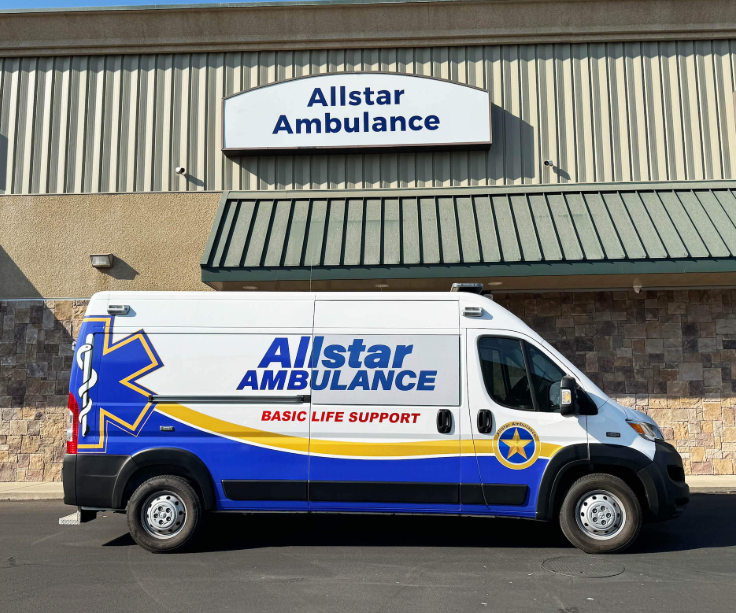
These are ground ambulances staffed by EMTs trained in CPR, basic airway management, and vital sign monitoring. A BLS ambulance has a stretcher, oxygen supply, an AED, and basic medications. It provides non-emergency patient care and transport for example, attaching an IV drip or administering oxygen. BLS units do not perform advanced cardiac or trauma procedures (those are ALS/Paramedic level), but we do stabilize patients and handle medically necessary tasks en route. According to industry sources, a BLS ambulance is designed for non-emergency inter-facility moves and pre-scheduled transfers.
Gurney/Stretcher Transport:
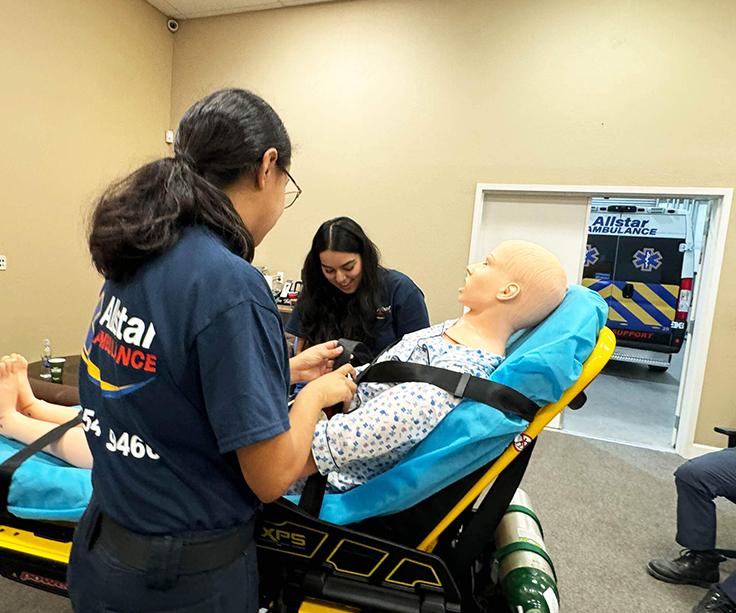
Some patients cannot tolerate sitting upright in a wheelchair. For them, we provide a gurney (a wheeled stretcher that lies flat) as the patient’s “bed on wheels”. Gurney transportation ensures patients who must lie flat or who need continuous monitoring are safely secured and moved. For example, hospitals and long-term care facilities often use gurney transport for residents going to appointments. As one guide explains, long-term care centers rely on gurney transportation so that residents who can’t sit upright in a wheelchair can still attend medical appointments.
Oxygen Support:
Ambulances are equipped with oxygen tanks and regulators. If a patient has a prescribed oxygen flow rate, EMTs can set up the tank in the vehicle so breathing support continues throughout the trip. Basic Life Support ambulances carry oxygen as part of their standard equipment. This means that patients with COPD, pneumonia, or other respiratory conditions can be transported safely with their oxygen therapy in place.
Event Medical Standby & On-Site Coverage:
Beyond point-to-point transports, many NEMT companies offer event standby services. This is often called on-site medical coverage. At concerts, races, conferences, or community gatherings, the provider stations EMTs and an ambulance at the venue. This ensures immediate emergency response if an attendee needs help. Event medical standby services provide “added peace of mind by remaining on-hand in case of an emergency situation” at large events. EMTs, paramedics, and fully equipped ambulances stand ready to handle anything from a fainting spell to a broken bone. In short, having professional medical staff and an ambulance on-site can make events safer for everyone.
Each of the above services is designed to meet specific needs without triggering an emergency response. We keep patients safe and comfortable, using trained personnel and proper equipment, but do so on a schedule rather than under duress.
Benefits of Choosing NEMT
Opting for non-emergency medical transport when appropriate has several advantages:
Comfort and Continuity:
Because NEMT is pre-scheduled, crews can manage long rides at a comfortable pace. Patients stay on their medication and feeding schedules, and things like oxygen, hydration, and bedtime routines continue without disruption. The ride is generally smooth and calm (no blaring siren), which is especially important for elderly or disabled patients.
Predictability:
Families and receiving facilities know when to expect the patient. NEMT companies often work closely with hospitals and nursing homes to coordinate arrival times. This reduces waiting and confusion, and ensures caregivers are ready to take over immediately.
Cost Savings:
Non-emergency transport is almost always less expensive than an emergency ambulance. If there’s no need for life-saving intervention, taking an NEMT or even a medical taxi can save hundreds of dollars. (For example, one health expert notes that using a car service instead of an ambulance can cost “hundreds of dollars less” when the situation is non-life-threatening.) Many insurance plans and Medicare also cover NEMT for eligible patients, whereas personal payment for a 911 transport can be very high.
Appropriate Care Level:
With NEMT, you get the level of care that fits the situation. We are exceptional for crises, but they come with high urgency and cost. For routine needs, we provide just what’s needed no more, no less ensuring resources are used wisely.
In summary, when a patient can wait and be prepared, choosing us avoids the stresses of an emergency response while still providing medical oversight. It’s a smart choice for planned transfers and routine medical appointments.
About Allstar Ambulance - Serving Stanislaus County
Allstar Ambulance is a locally owned and operated provider of non-emergency medical transport in the Modesto/Stanislaus area. We specialize in Basic Life Support (BLS) and Interfacility Transport (IFT) services. Our EMT team is committed to fast, professional service with a community focus. Whether you need a hospital discharge ride, a transfer from home to a clinic, or medical coverage at an event, Allstar Ambulance is here to help.
- Contact Information: Modesto, CA (Stanislaus County) | Phone: (209) 554-9466 | Email: info@allstarambulance.com
- Address: 4459 Spyres Way, Suite E, Modesto, CA 95356
When “ambulance transport services near me” matters, remember Allstar Ambulance is ready 24/7 to serve our community. We ensure that even non-emergency trips are handled with care, safety, and the medical support our patients need.
FAQs
When should I choose a scheduled medical transport instead of calling 911?
If the patient’s condition is not life-threatening and can be planned ahead, use non-emergency transport. For example, routine hospital discharges, appointments for treatments (dialysis, PT/OT, etc.), or transfers to nursing homes should use NEMT. In these cases the patient is stable and can wait for the scheduled pickup. However, if symptoms are severe (chest pain, stroke signs, severe bleeding, altered consciousness, etc.), call 911 immediately.
What is Basic Life Support (BLS) transport?
BLS transport refers to a non-emergency ambulance ride with an EMT crew. These EMTs provide basic medical care such as CPR, wound care, vital sign monitoring, and oxygen support while moving the patient safely. BLS ambulances carry equipment like oxygen tanks, a stretcher, a first-aid kit, and an AED. We do not offer advanced cardiac or critical care (no paramedics for drugs/intubation), but we can handle minor injuries, stabilize breathing with oxygen, and keep the patient comfortable during transport.
Can non-emergency transport handle patients on oxygen or needing a gurney?
Yes. Our providers are equipped for these needs. We have portable oxygen tanks and regulators, so if a patient requires oxygen therapy it continues uninterrupted. For patients who must lie flat (for example, after surgery or with severe mobility issues), the ambulance can load a gurney. A gurney is essentially a bed on wheels that secures the patient during transit. We will strap the patient to the gurney and load it into the vehicle. Hospitals, rehab centers, and nursing homes commonly use gurney transport for patients who can’t tolerate wheelchairs.
What are event medical standby services or on-site coverage?
These services station medical crews at special events. Instead of transporting a single patient, an ambulance and EMTs remain on-site (standby) throughout the event. This provides quick emergency care to attendees if needed. Allstar Ambulance can provide trained EMTs, paramedics, and fully stocked BLS ambulances at your community event, sports game, festival, or corporate function. Having on-site coverage gives organizers and guests peace of mind that any medical issue will be handled promptly by professionals.
How do I schedule a non-emergency medical transport with Allstar Ambulance?
Scheduling is easy. You can call Allstar Ambulance at (209) 554-9466 or email info@allstarambulance.com. We’ll ask about the patient’s condition and pickup/drop-off locations, then set up a convenient time. Often, healthcare providers or hospitals initiate the request if it’s part of a discharge plan. We recommend booking at least a day in advance when possible. For urgent but non-critical needs, we strive to accommodate same-day requests as well.
Is non-emergency transport covered by insurance?
Insurance coverage varies. Many plans (including Medi-Cal) cover non-emergency ambulance trips if they are medically necessary and prescribed by a doctor. It’s best to verify with your insurance or Medicare about coverage. In many cases, NEMT is covered when the patient truly cannot use other transportation. If not covered, the cost is generally far lower than an emergency trip, and Allstar Ambulance can discuss payment options.